How to Choose the Right Turbo Blower for Your Plant
Release time: Jul.02.2026
Click volume: Views
The Shift to Dynamic Aeration
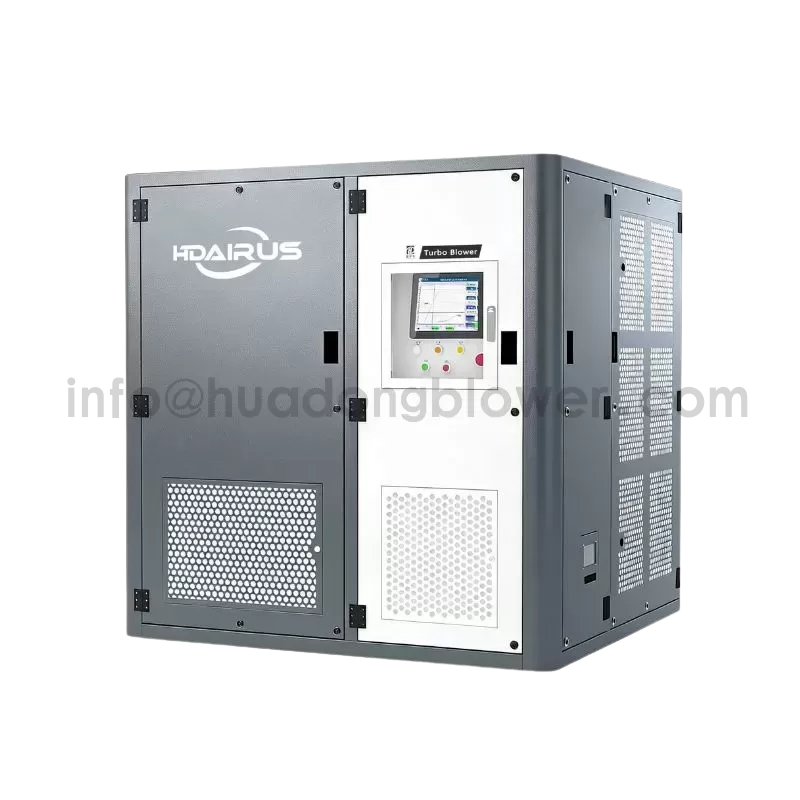
Upgrading a facility's air delivery system or designing a new process plant represents a significant capital investment. For industries like wastewater treatment, chemical processing, and pneumatic conveying, moving from legacy positive displacement equipment to High-Speed Turbo Blowers (such as air-suspension or magnetic levitation models) is the most effective way to cut energy costs.
Unlike traditional sopladores, turbo blowers are dynamic centrifugal machines. They do not trap air mechanically; instead, they use a high-speed impeller to convert kinetic energy into static pressure. Because their performance relies entirely on aerodynamics, selecting the correct unit requires precise parameter matching. An oversized turbo blower will constantly trigger safety bypasses, while an undersized unit will fail to overcome system backpressure.
Step 1: Define Precise Inlet and Outlet Parameters
The performance of a high-speed turbo blower changes based on the density of the air it compresses. Designers must establish exact baseline values for flow and pressure based on real-world conditions rather than relying on generalized estimates.
Volumetric Flow Rate Calculations
Plant engineers frequently specify airflow requirements using Standard or Normal conditions. However, a turbo blower calculates performance based on Actual Inlet Flow, which reflects the real physical volume of air entering the impeller eye. To ensure an accurate selection, your standard or normal design values must be converted to actual inlet conditions, accounting for the true temperature, atmospheric pressure, and moisture levels at the intake.
True System Backpressure
For aeration basins, the total resistance the blower must overcome is a combination of multiple plant forces. You must factor in the maximum liquid depth (static head) during peak plant operations, add the dynamic friction losses generated by the plant's piping network, and include the age-related fouling resistance of the downstream diffusers. This ensures the turbo blower can consistently deliver air without stalling under peak pressure conditions.
Step 2: Assess Site Environmental Variables
Because centrifugal impellers are dynamic and sensitive to air density, local atmospheric conditions directly shift the blower’s operating curve.
Altitude and Ambient Barometric Pressure
As altitude increases, atmospheric pressure drops, making the air less dense. A turbo blower operating at a plant located high above sea level must spin significantly faster to deliver the same mass of oxygen as an identical unit located at a coastal, sea-level facility. Always specify the exact elevation of your plant to ensure the impeller is geared for the correct air density.
Temperature Extremes
Air density changes inversely with temperature: cold air is dense and heavy, while hot air is thin and light.
l Summer Peak Temperature: Determines the maximum required rotation speed. The blower must spin fast enough to deliver the target mass flow when the air is thinnest.
l Winter Minimum Temperature: Dictates the maximum power draw on the motor. Dense winter air increases the mass load on the impeller, meaning the motor draws more horsepower to turn at the same speed, requiring an adequate electrical safety margin.
Step 3: Evaluate Flow Turndown and System Needs
Most industrial processes face variable demands throughout the day. In wastewater plants, biological oxygen demand changes based on wastewater influx rates, requiring the blower to scale its output up or down.
Every centrifugal turbo blower operates within a strict aerodynamic envelope bounded by two physical limits on its performance curve:
l The Choke Limit: The absolute maximum flow the impeller can physically move.
l The Surge Limit: The minimum safe flow threshold. If airflow drops too low, the air can reverse direction through the spinning impeller, causing violent vibrations and triggering automated safety shutdowns.
Review your plant's minimum and maximum operational flow requirements. If your process requires a wide flow turndown (such as dropping to low capacities during night hours), verify that the turbo blower's variable frequency drive and impeller geometry can safely support that range without crossing the surge line. For highly volatile flow demands, splitting the total plant capacity across multiple smaller turbo blowers running in parallel is often more efficient and safer than relying on a single large machine.
Step 4: Choose the Right Suspension Technology
Modern high-speed turbo blowers utilize contactless bearings to eliminate mechanical friction, wear, and oil lubrication. The choice generally comes down to two primary suspension architectures:
Air-Suspension (Air Bearing) Turbo Blowers
Air-bearing units use the air stream itself to support the rotating shaft. As the shaft spins up, it creates a high-pressure aerodynamic cushion that lifts and centers the rotor.
l Pros: Highly cost-effective, structurally simple, and mechanically self-contained.
l Best For: Small to medium-scale municipal wastewater plants with stable, continuous operation and fewer start/stop cycles.
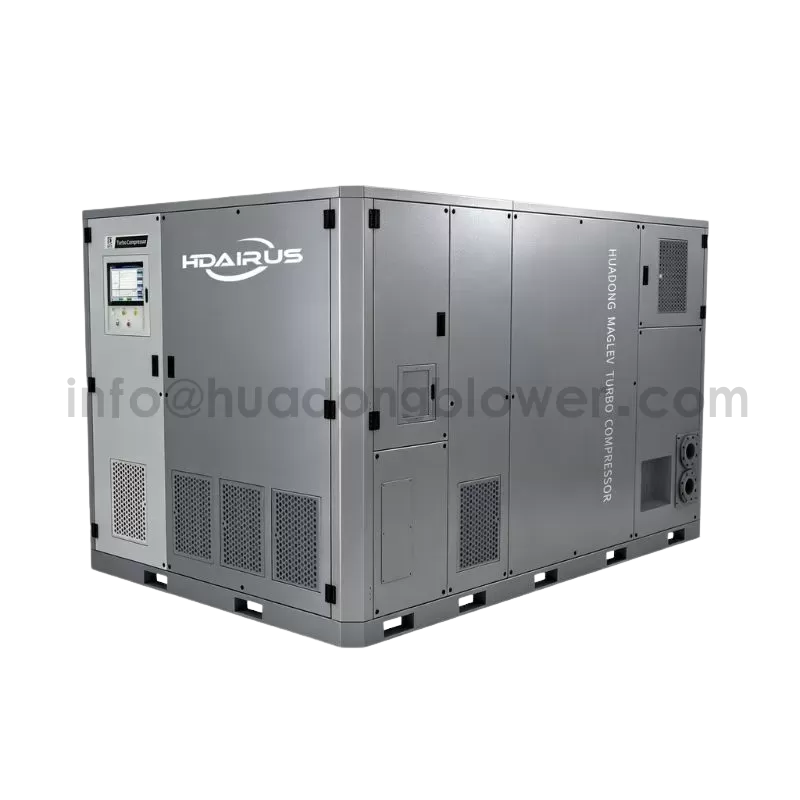
Magnetic Levitation (Maglev) Turbo Blowers
Maglev units utilize active electromagnets to suspend the shaft mid-air. Position sensors monitor the rotor's alignment thousands of times per second, and a digital controller dynamically adjusts the magnetic field to keep the shaft centered.
l Pros: Unlimited start/stop cycles, immune to ambient dust wear during startup, and features comprehensive digital self-diagnostics.
l Best For: Large regional treatment plants, deep aeration tanks, heavy industrial processes, and automated facilities with highly frequent load changes.
Recommended Products