Maximizing Wastewater Aeration: Why Screw Blowers Offer Superior Efficiency at Part Loads
Release time: Jul.23.2026
Click volume: Views
In municipal and industrial wastewater treatment plants (WWTPs), biological aeration is not a static process. Diurnal load cycles, seasonal weather shifts, and fluctuating influent volumes mean that an aeration system rarely operates at its 100% rated design capacity. In fact, most aeration blowers spend more than 70% of their operational lifetime operating under part-load conditions.
While traditional rotary lobe (Roots) blowers remain popular for their rugged simplicity, their constant external compression model leads to significant energy penalties when turned down. Rotary Screw Blowers, featuring internal compression and optimized rotor geometry, have emerged as the premier choice for plants seeking maximum turndown flexibility and lower electricity bills under variable operating conditions.
1. Internal Compression vs. External Isochoric Compression
The fundamental difference between a rotary lobe blower and a rotary screw blower lies in how the air is compressed inside the machine.
Rotary Lobe (Roots) Blower:
[Inlet Air] ──► [Transported at Atmospheric Pressure] ──► [Slammed into Discharge Line] (External Compression / Energy Loss)

Rotary Screw Blower:
[Inlet Air] ──► [Trapped between Male/Female Screws] ──► [Progressively Compressed Internally] ──► [Smooth Discharge]
Rotary Lobe (External Compression): A Roots blower does not compress air inside its casing; it merely traps a volume of atmospheric air and pushes it into the discharge pipe, where it is slammed against line backpressure. This isochoric compression is thermodynamically inefficient, particularly at higher pressures (>50 kPa).
Rotary Screw (Internal Compression): A screw blower uses intermeshing male and female helical rotors with a shrinking pocket volume. The air is progressively squeezed inside the compression chamber before being released into the piping. This internal compression matches the line pressure far more smoothly, consuming 15% to 35% less shaft power across the entire operating curve.
2. Superior Isentropic Efficiency Across Wide Turndown Ranges
When paired with Variable Frequency Drives (VFDs) to handle fluctuating Dissolved Oxygen (DO) demand, the difference in part-load efficiency becomes stark.
100% ┌─────────────────────────────────────────────────────────┐
     │                                     Screw Blower Curve  │  <-- Maintains High Efficiency at Low Speed
 EFF │                      /----------------------------------│
     │                     /                                   │
     │       /------------/      Roots Blower Curve            │  <-- Efficiency Drops Steeply at Lower Speed
  0% └──────┴──────────────────────────────────────────────────┘
           20% Speed                     70% Speed            100% Speed
Flat Efficiency Curves: Roots blowers suffer from increased internal slip (air leaking back across rotor clearances) as speed decreases, causing their volumetric and isentropic efficiencies to plummet at turned-down speeds.
Sustained Energy Savings at Part Loads: Screw blowers maintain high internal compression efficiency even when slowed down to 30% or 40% of maximum speed. Whether running at full capacity during peak morning inflows or throttled down during low-flow nighttime hours, the screw blower operates near its optimal efficiency sweet spot.
3. Cooler Discharge Air Protects Aeration Membranes
Because internal compression generates less parasitic heat than external backpressure slamming, rotary screw blowers deliver significantly cooler discharge air.
Lower Thermal Load: Discharge air temperatures from a screw blower are typically 15°C to 25°C lower than those from a comparable Roots blower operating at the same discharge pressure.
Extending Diffuser Lifespan: Cooler air prevents the thermal degradation and hardening of EPDM or silicone fine-bubble diffuser membranes in the aeration tanks, preserving oxygen transfer efficiency (OTE) and preventing costly membrane replacements.
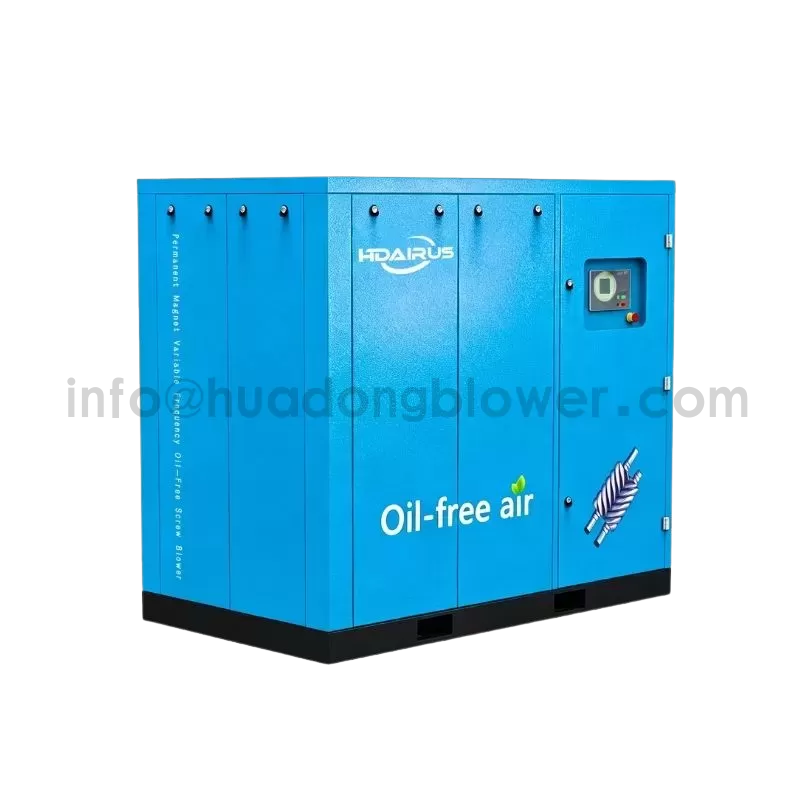
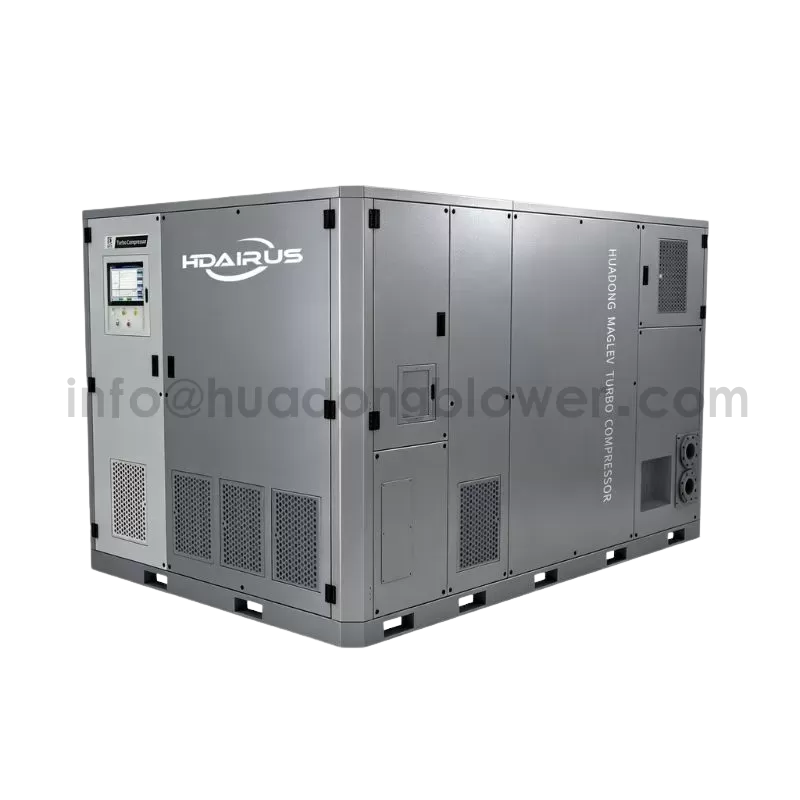
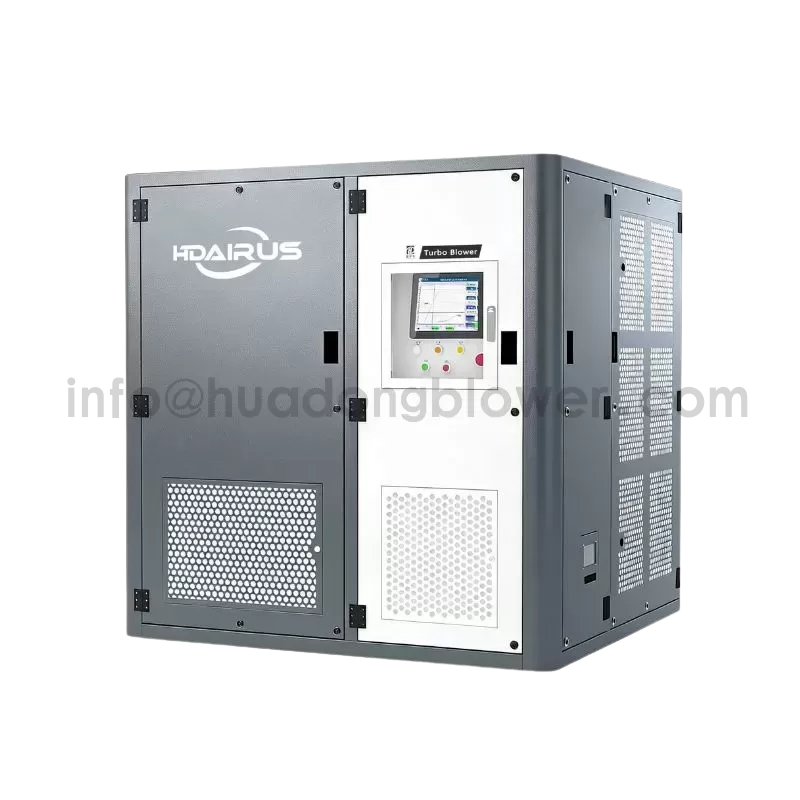
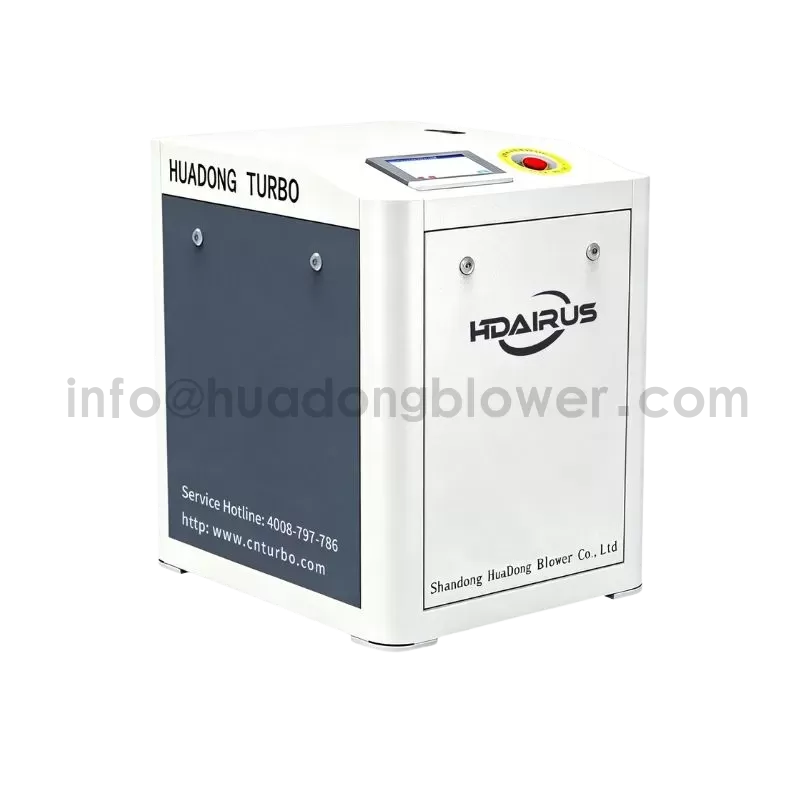
HDAirus: High-Efficiency Screw Blower Solutions for Smart WWTPs
At HDAirus (Shandong Huadong Blower Co., Ltd.), we provide advanced screw blower packages designed to minimize total lifecycle costs in variable-demand aeration applications:
Precision Helical Rotor Profiling: Our screw blowers utilize advanced 5-axis CNC-machined rotor profiles engineered for minimal internal clearances and maximum volumetric throughput.
VFD-Optimized Smart Control: We assemble turnkey VFD control cabinets that seamlessly interface with site DO sensors and SCADA networks, enabling precise, automated speed regulation without sacrificing thermodynamic efficiency.
100% Oil-Free Certified Purity: Engineered with robust labyrinth seals and oil-free air chambers to ensure zero hydrocarbon contamination reaches your biological treatment basins.
Contact HDAirus today to calculate your potential energy savings by upgrading your aeration system to high-efficiency rotary screw blower technology.
Recommended Products