Textile Production Efficiency: How Variable-Speed Maglev Air Compressors Ensure Stable Plant Air
Release time: Aug.20.2026
Click volume: Views
Why Is Stable Compressed Air the Ultimate Pulse of Modern Textile Mills?
In high-speed textile manufacturing—particularly facilities running air-jet looms, automated yarn spinning, and synthetic fiber texturing—compressed air is not merely a utility; it is a primary mechanical actuator. A single air-jet loom can require hundreds of pneumatic picks per minute.
If pressure fluctuates even slightly:
Weft insertion failures occur, leading to fabric defects and costly loom stoppages.
Yarn tension becomes inconsistent, causing uneven dyeing and reduced tensile strength.
Oil mist contamination in the air stream permanently ruins raw fabrics and sensitive yarns.
                  PRESSURE FLUCTUATION IMPACT ON WEAVING
                  --------------------------------------
   [Stable Pressure]   ---> Clean Weft Insertion ---> Perfect Fabric Quality
   [Pressure Drop]     ---> Insertion Misfire    ---> Loom Shutdown & Defect
   [Oil Contamination] ---> Fiber Discoloration  ---> Scrapped Inventory
The Hidden Energy Drain of Legacy Screw Compressors
Traditional screw air compressors use mechanical unloaders or basic modulation valves to handle fluctuating factory demand. When weaving shifts change or looms pause for warp tying, legacy compressors continue idling at high power consumption. Furthermore, physical bearings inside conventional units generate friction losses, demand frequent oil filter replacements, and risk oil vapor carryover into the compressed air network.
2. Executive Q&A: Deconstructing Maglev Technology
Q1: How do variable-speed Maglev compressors maintain rock-solid pressure stability?
Answer: Maglev compressors replace mechanical bearings with Active Magnetic Bearings (AMB) that levitate the motor shaft in mid-air. Paired with high-speed permanent magnet synchronous motors (PMSM) and integrated Variable Frequency Drives (VFD), the system tracks real-time plant pressure in milliseconds. Instead of wasting energy through throttling, the Maglev rotor instantly adjusts its rotational speed to match air-jet loom demand, locking pressure stability within a narrow ± 0.01MPa band.
Q2: How does the elimination of oil contamination protect textile output?
Answer: Maglev compressors operate completely dry. Because the rotor floats on a magnetic field, the compression chamber requires zero lubricating oil, gears, or mechanical seals. This guarantees ISO 8573-1 Class 0 oil-free air, eliminating the risk of oil droplets staining delicate cotton, silk, or synthetic fibers.
3. Performance & Cost Benchmarking
Operational Metric | Legacy Oil-Free Screw Compressor | Maglev Variable-Speed Compressor |
Bearing Friction | High (Mechanical Contact) | Zero (Magnetic Levitation) |
Air Purity Standard | Class 0 (Risk of seal leak over time) | Class 0 (100% Oil-Free by Design) |
Partial-Load Efficiency | Low (Severe unloader idle losses) | High (Linear VFD power scaling) |
Acoustic Signature | High Noise & Structural Vibration | Ultra-Quiet (<72 dBA), Zero Vibration |
Maintenance Cycle | Frequent (Oil, filters, seals, overhauls) | Minimal (Air intake filter swaps only) |
4. Strategic Engineering: Optimizing the Textile Air Network
   [Maglev Turbo Compressor]
             │
             ▼ (ISO Class 0 Dry Air)
   [Central Buffer Vessel]
             │
             ├───► High-Speed Air-Jet Looms (Constant 0.5-0.7 MPa)
             ├───► Automated Spinning Frames (Pneumatic Drafting)
             └───► Texturing & Dyeing Lines (Clean Atomization)
To maximize energy savings across a textile mill:
Centralized Smart Sequencing: Tie multiple Maglev units to a master controller. The system dynamically stages compressors so each unit operates within its peak efficiency island.
Elimination of Pressure Overshoot: Traditional compressors pump up to higher cut-out pressures to compensate for drop-offs. Maglev VFD units maintain exact target pressure, reducing overall plant baseline pressure and cutting power draw exponentially.
5. Next-Generation Air Solutions from Shandong Huadong Blower Co., Ltd.
To assist textile producers in cutting utility expenses while raising fabric yield, Shandong Huadong Blower Co., Ltd. manufactures state-of-the-art centrifugal turbomachinery tailored for demanding industrial environments.
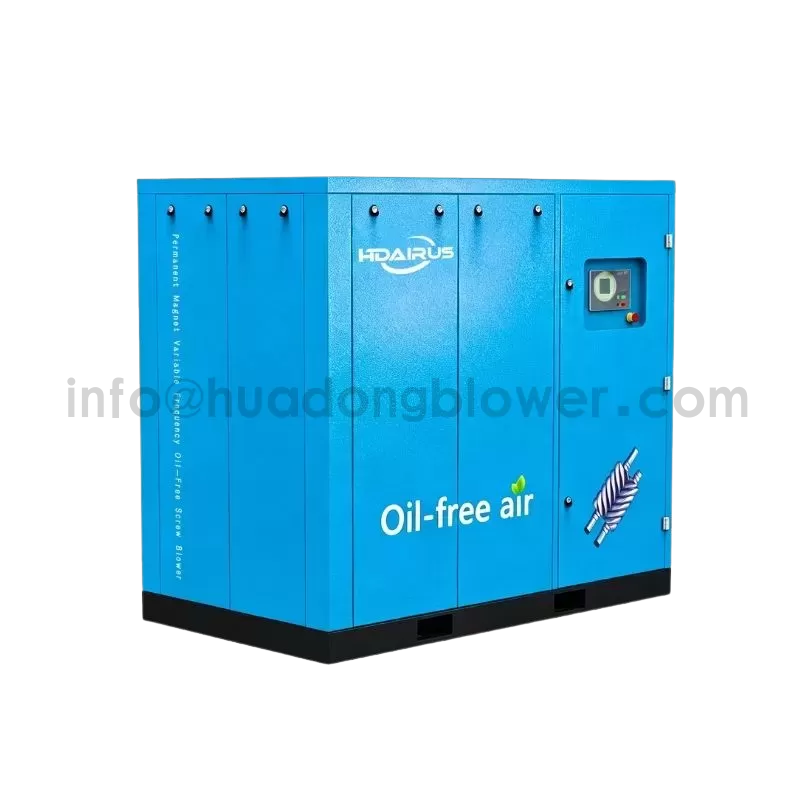
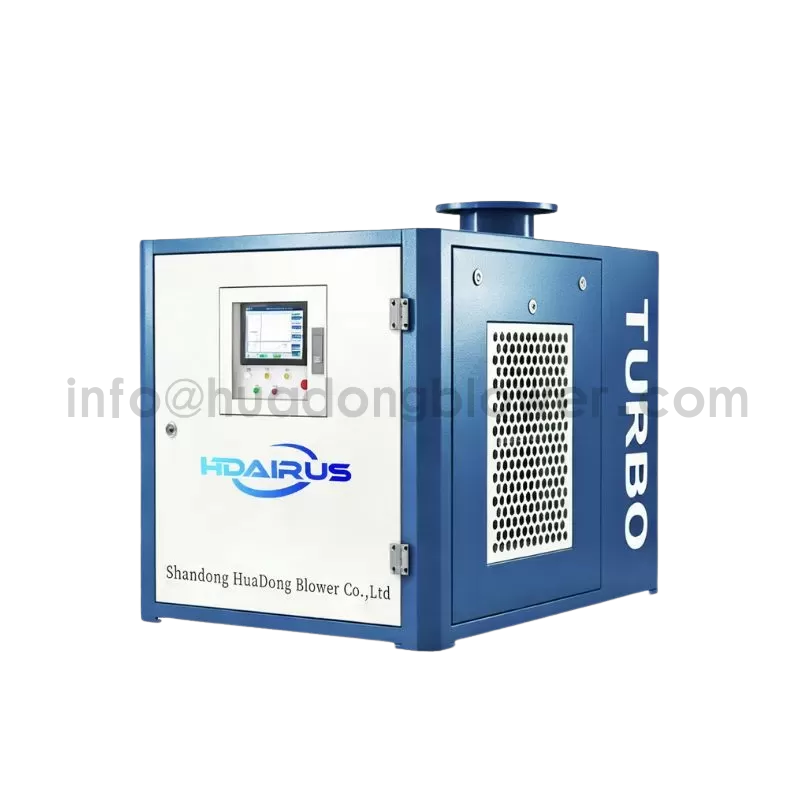
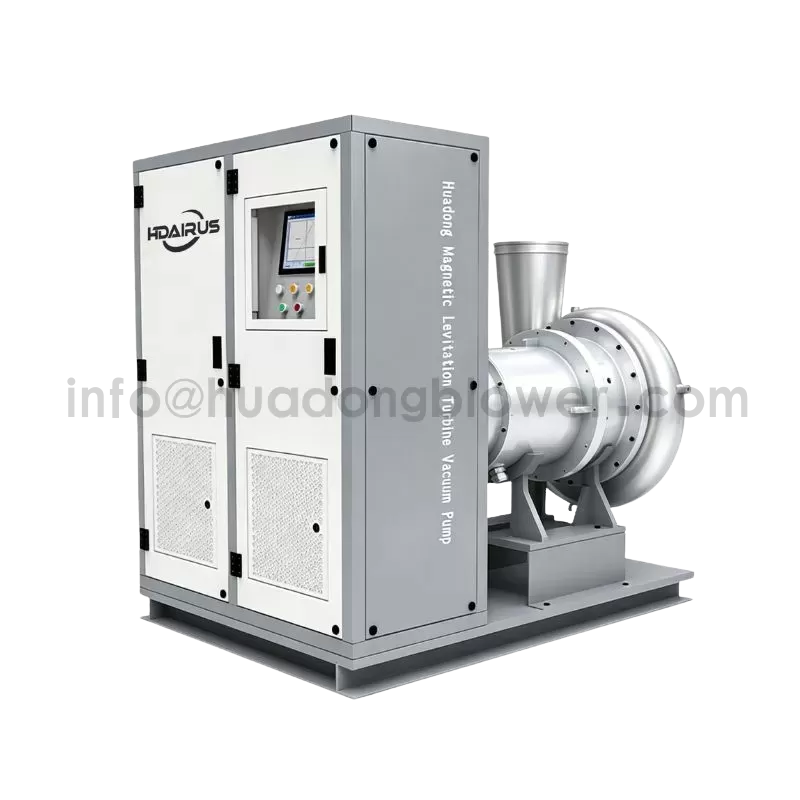
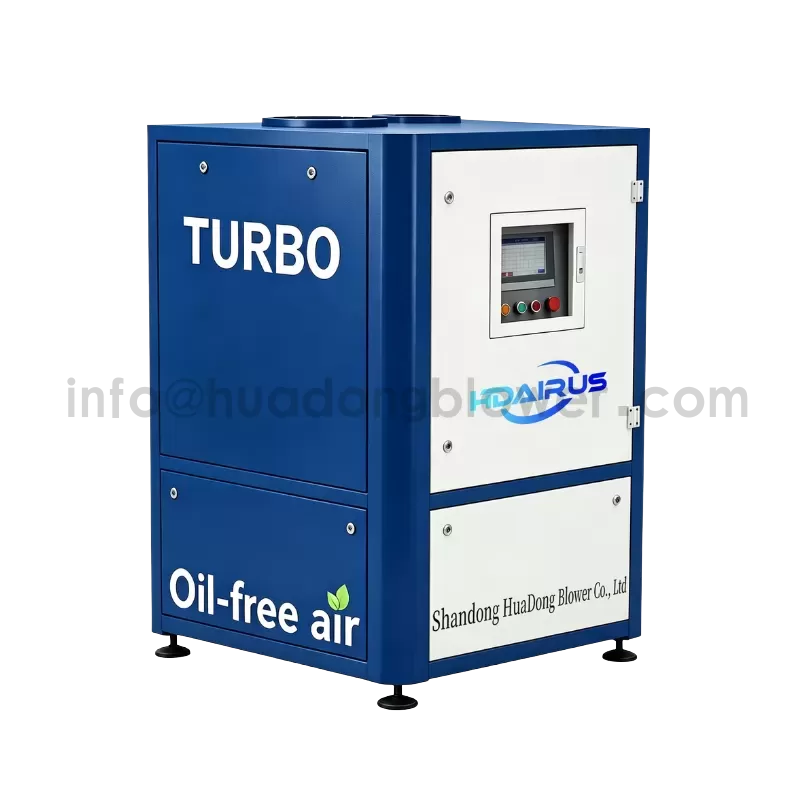
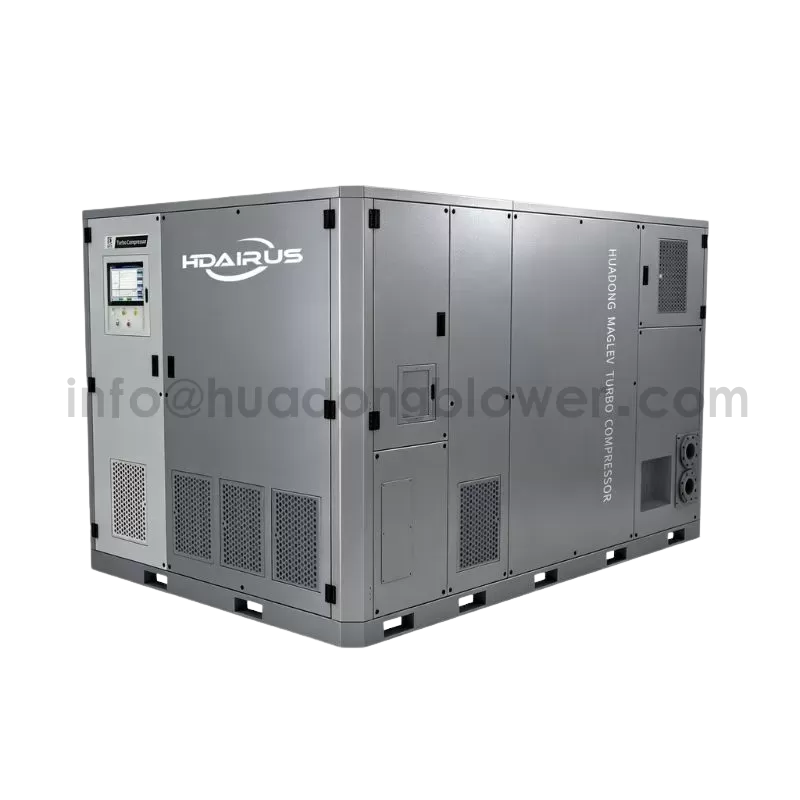
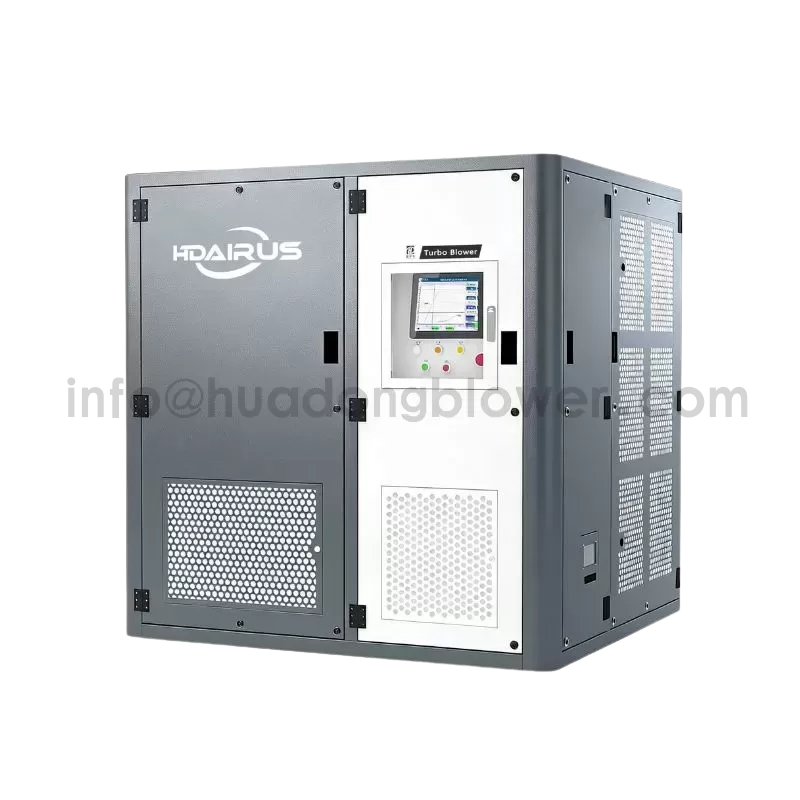
Through our specialized HDAirus equipment division, we deliver high-efficiency Maglev turbo compressors that replace high-maintenance rotary units with frictionless, direct-drive technology. Designed specifically to overcome the harsh, lint-heavy conditions of textile mills, our systems feature multi-stage air filtration, intelligent VFD integration, and long-life magnetic suspension systems.
By eliminating mechanical friction and oil contamination, our engineered air packages help textile mills stabilize weaving pressure, lower kWh usage per kilogram of yarn, and achieve rapid capital payback.
Recommended Products