Why More Factories Are Switching to Turbo Blowers in 2026
Release time: May.28.2026
Click volume: Views
The Global Industrial Realignment
The industrial landscape is undergoing a rapid technological transformation. Manufacturing plants, water treatment facilities, and chemical processing complexes are actively decommissioning legacy compression infrastructure. The traditional volumetric lobe and screw blowers that anchored production lines for generations are being phased out in favor of high-speed turbo blowers.
This widespread transition is not merely an incremental equipment upgrade; it represents a fundamental realignment of industrial priorities. Faced with fluctuating energy costs, demanding carbon neutrality mandates, and a shifting labor market, factory operations are prioritizing dynamic, frictionless air delivery systems to secure long-term operational resilience.
1. Meeting Aggressive Carbon and Energy Mandates
The primary catalyst for the accelerated adoption of turbo blowers is the tightening grid efficiency frameworks worldwide. Modern factories are legally and financially incentivized to lower their carbon intensity profiles. Low-pressure compressed air is a notorious energy sink, frequently capturing a double-digit percentage of a processing facility's total electricity consumption.
The Frictionless Energy Deficit
Traditional displacement blowers operate with continuous mechanical friction. Gears, driving belts, contact bearings, and sliding seals introduce heavy parasitic energy losses that convert expensive grid power into waste heat.
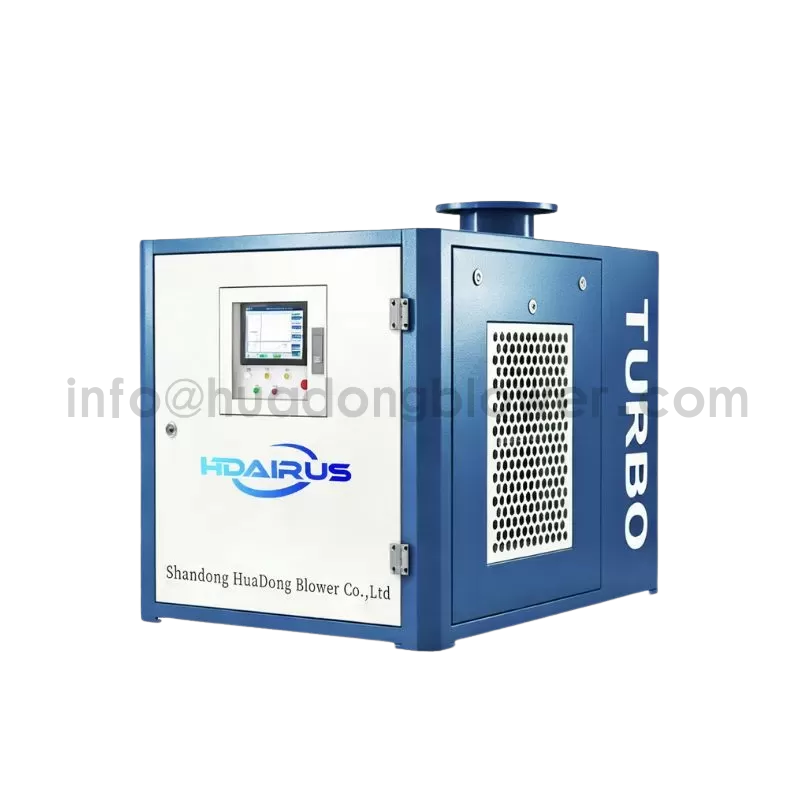
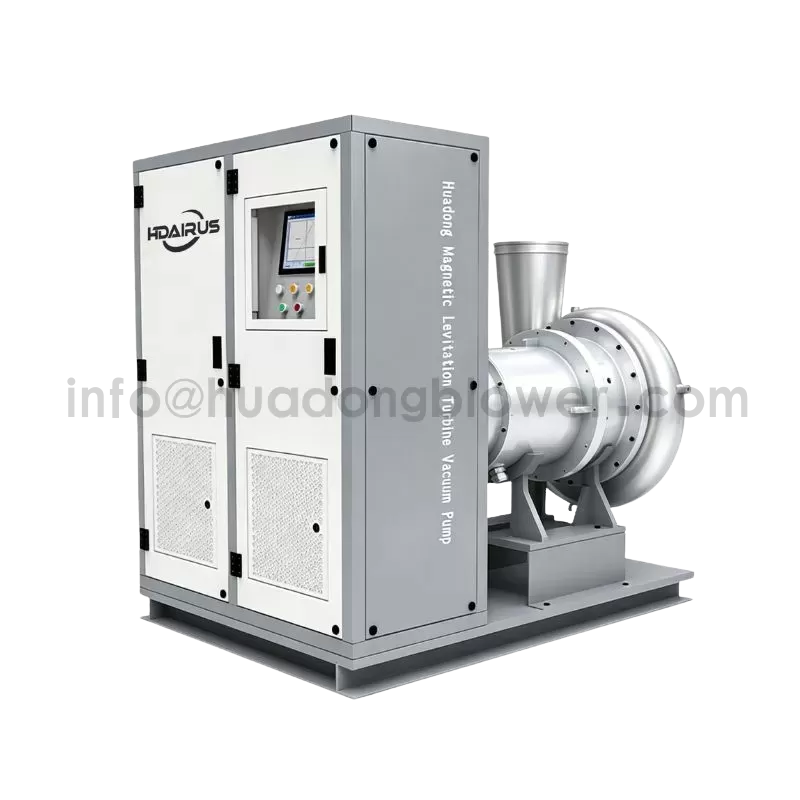
High-speed turbo blowers eliminate this mechanical deficit by utilizing advanced aerodynamic airfoil bearings or active magnetic levitation bearings. By suspending the motor shaft entirely on a fluid film of air or an electromagnetic cushion, the rotor spins with near-zero mechanical resistance.
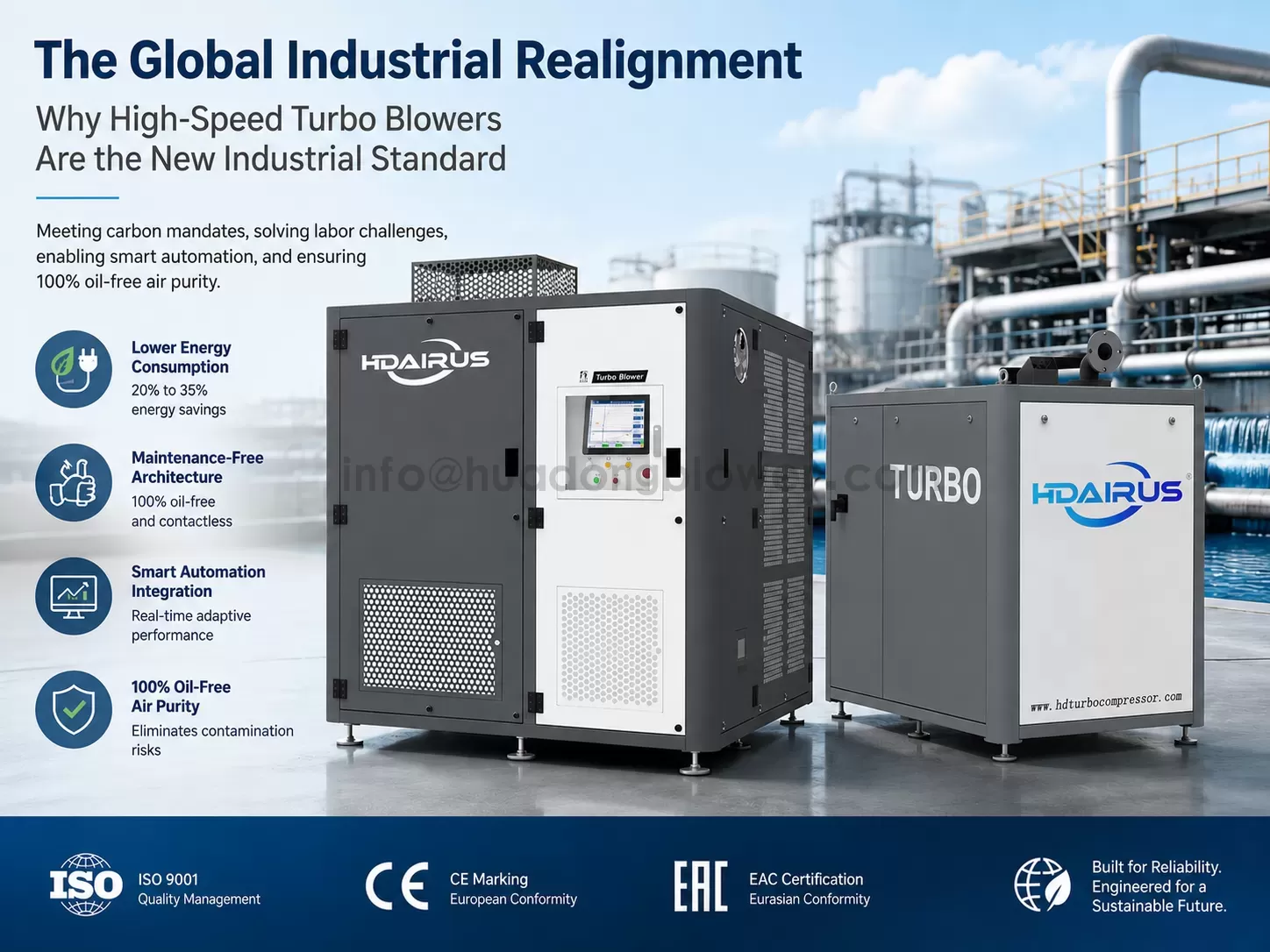
When combined with premium-efficiency permanent magnet (PM) synchronous motors, turbo blowers reduce net electrical usage by 20% to 35% compared to traditional alternative blower designs. For a large-scale industrial facility operating around the clock, this reduction translates into hundreds of thousands of dollars saved annually, while immediately validating corporate sustainability metrics.
2. Overcoming Skilled Labor Shortages with Maintenance-Free Architecture
The global industrial sector faces a persistent shortage of specialized maintenance technicians and mechanical engineers. Plants are deliberately choosing infrastructure that requires minimal manual intervention to remain operational.
Traditional positive displacement units require rigid, labor-intensive upkeep schedules, including:
l Periodic lubrication oil flushes and oil disposal management.
l Regular drive-belt tension calibration and replacement.
l Re-shimming and replacing worn-out contact bearings and mechanical shaft seals.
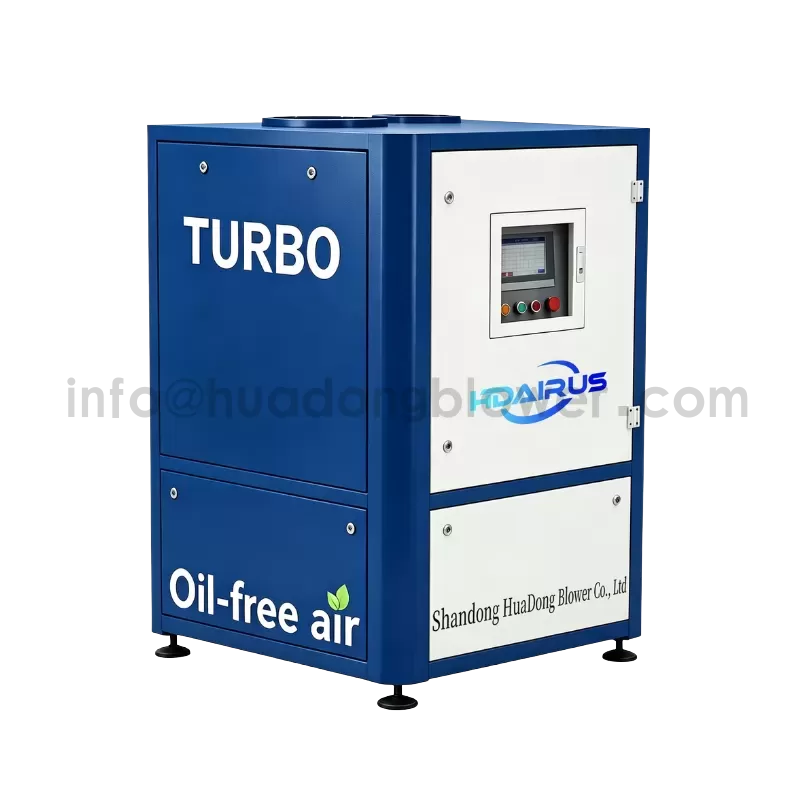
Turbo blowers are engineered with a natively 100% oil-free architecture. Because the internal dynamic components function entirely without physical contact, mechanical wear is effectively engineered out of the machine. The compression envelope requires zero lubricants.
The maintenance protocol for a high-performance turbo blower is restricted to a single simple task: routinely swapping the intake air filter elements. By eliminating oil sumps, timing gears, and wearing seals, factories protect themselves against human error in maintenance and lower their total cost of ownership (TCO) over the asset lifecycle.
3. Real-Time Process Adaptation via Smart Automation
Modern production facilities are increasingly data-driven, requiring equipment that integrates natively with automated control architecture. High-speed turbo blowers are built with comprehensive sensor suites and integrated Variable Frequency Drives (VFDs) that align with these smart factory models.
Industrial air demand is rarely static. Wastewater treatment plants experience massive peak influent loads during midday and sharp drops at night; pneumatic conveying systems require precise airflow fluctuations depending on the density of the material being moved.
When a traditional fixed-speed blower encounters a drop in factory demand, it must vent excess compressed air into the atmosphere through relief valves, wasting the electrical energy used to compress it.
Turbo blowers utilize onboard digital controllers to interface directly with a facility's centralized Distributed Control System (DCS) or Supervisory Control and Data Acquisition (SCADA) network. When field sensors detect an operational change, the integrated VFD adjusts the shaft rotation speed instantly. Because dynamic blower performance tracks the Affinity Laws, a minor downward adjustment in motor speed yields an exponential reduction in power draw, matching energy consumption precisely to real-time production requirements.
4. Eradicating Process Contamination Risks
In high-purity industrial sectors—such as pharmaceutical synthesis, commercial food and beverage packaging, microelectronics fabrication, and membrane-bioreactor (MBR) water purification—air purity is a non-negotiable metric.
Oil-flooded or traditionally lubricated compressors always pose a threat of hydrocarbon carryover, where microscopic oil vapors bypass physical seals and enter the process air stream. This oil contamination can ruin entire batches of pharmaceutical reactants, foul delicate food products, or blind expensive downstream filtration membranes.
Because turbo blowers do not utilize oil anywhere within the machine enclosure, the risk of oil carryover is completely eliminated. The resulting discharge air is pristine and compliant with the most stringent international sanitary regulations. This native purity provides a reliable insurance policy against product recalls, catalyst poisoning, and unexpected process downtime.
HDAirus Material Integrity and International Standardization
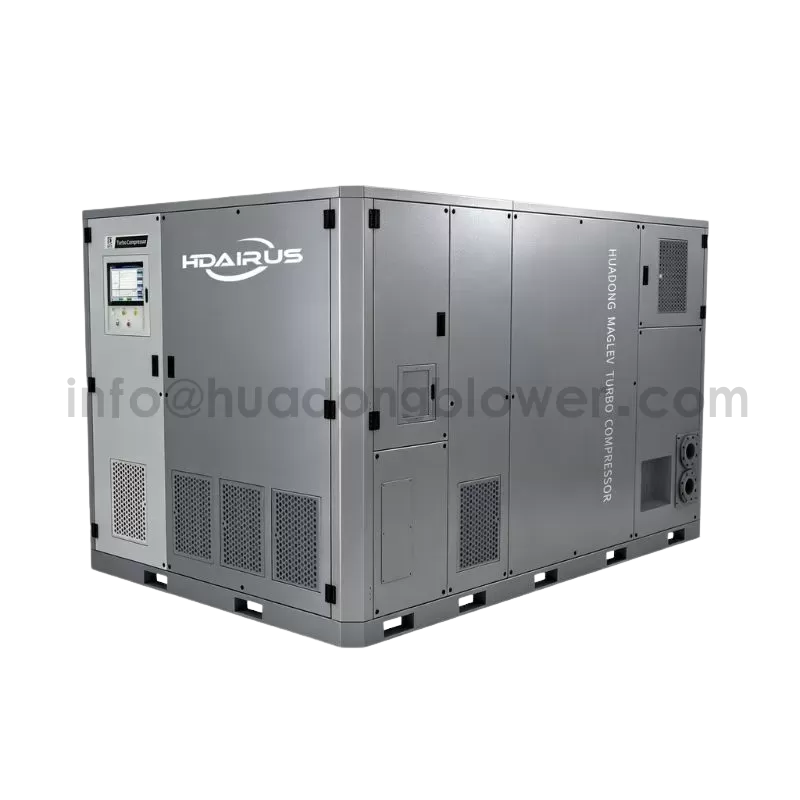
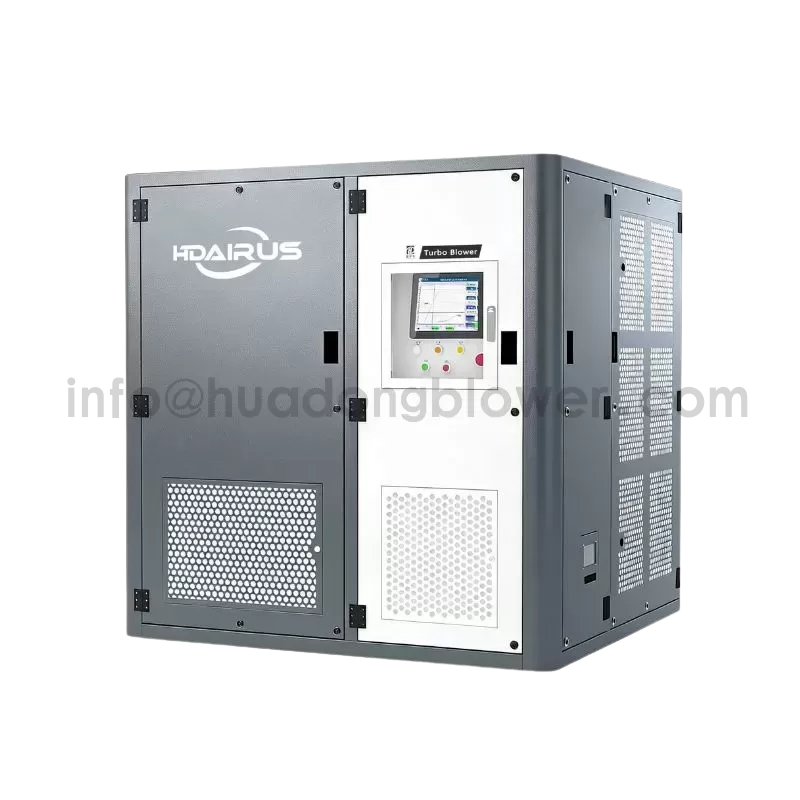
Deploying high-speed turbomachinery into volatile, continuous-duty industrial plants requires rugged physical engineering. HDAirus constructs its airfoil and magnetic bearing turbo blowers under a rigorous ISO 9001 quality management framework using robust industrial metallurgy:
l High-Strength Heavy Cast Iron: Used for outer structural castings to ensure superior mechanical alignment and high-level acoustic dampening.
l Premium Stainless Steel Internals: Applied to the internal air path to eliminate moisture-driven oxidation and chemical pitting from atmospheric intake air.
l High-Quality Specialized Coatings: Applied to internal tolerances and dynamic surfaces to provide a chemical-resistant barrier against abrasive particulate erosion.
To facilitate smooth engineering integration and satisfy regional compliance codes across global markets, all HDAirus turbo configurations carry complete CE and EAC marks. This ensures that every unit complies fully with the strict technical, environmental, and electrical safety regulations mandated by major international industrial authorities. Partner with HDAirus to anchor your factory with the modern, high-efficiency air infrastructure required for the future of manufacturing.
Recommended Products