High-Efficiency Fluidized Bed Combustion: Delivering Stable Air Supply with Maglev Turbo Blowers in Boiler Plants
Release time: Sep.17.2026
Click volume: Views
In thermal power generation and industrial steam plants, Fluidized Bed Combustion (FBC) and Circulating Fluidized Bed (CFB) boilers provide high fuel flexibility and low emission performance. By suspending solid fuel particles—such as coal, biomass, or petroleum coke—in a upward-flowing bed of inert material, FBC boilers achieve thorough combustion and low nitrogen oxide ($NO_x$) formation.
Maintaining steady fluidization requires dynamic, continuous combustion air supply. Maglev turbo blowers provide a modern, oil-free, highly efficient aeration solution, replacing traditional centrifugal fans and Roots blowers in primary (under-bed) and secondary (over-fire) air systems.
1. Air Distribution and Combustion Dynamics in Fluidized Beds
Fluidized bed boilers rely on balanced pressure and volumetric flow to float the bed material without causing blowouts or localized fuel settling.
+-----------------------------------------------------------------------+
|                    FLUIDIZED BED BOILER AIR SYSTEM                    |
|                                                                       |
|  [ Ambient Air Intake ] ──> [ Maglev Turbo Blower ]                   |
|                                     │                                 |
|                  ┌──────────────────┴──────────────────┐              |
|                  ▼                                     ▼              |
|  [ Primary Air Plenum (Under-Bed) ]   [ Secondary Air Ports (Over-Fire) ]
|                  │                                     │              |
|                  ▼                                     ▼              |
|  [ Fluidized Fuel/Ash Bed Zone ] ────> [ Freeboard Combustion Zone ] |
+-----------------------------------------------------------------------+
Core Pneumatic Requirements in FBC Air Supply
Fluidization Pressure Maintenance: Primary air must overcome dense bed material resistance to lift the fuel layer, demanding high static discharge pressure.
Staged Air Injection: Secondary air ports inject high-velocity air into the freeboard zone to complete volatile combustion, requiring precise pressure and flow control.
Dynamic Load Following: Boiler steam demand fluctuates based on grid load or process heat requirements. Air supply units must adjust output rapidly without entering surge conditions.
2. Technical Advantages of Maglev Turbo Blowers in Boiler Air Delivery
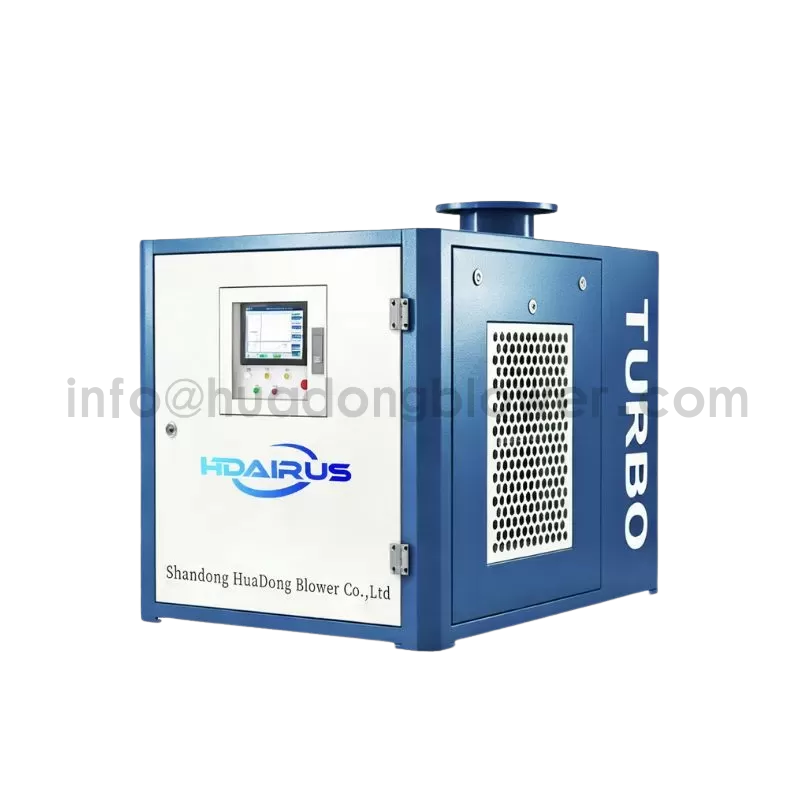
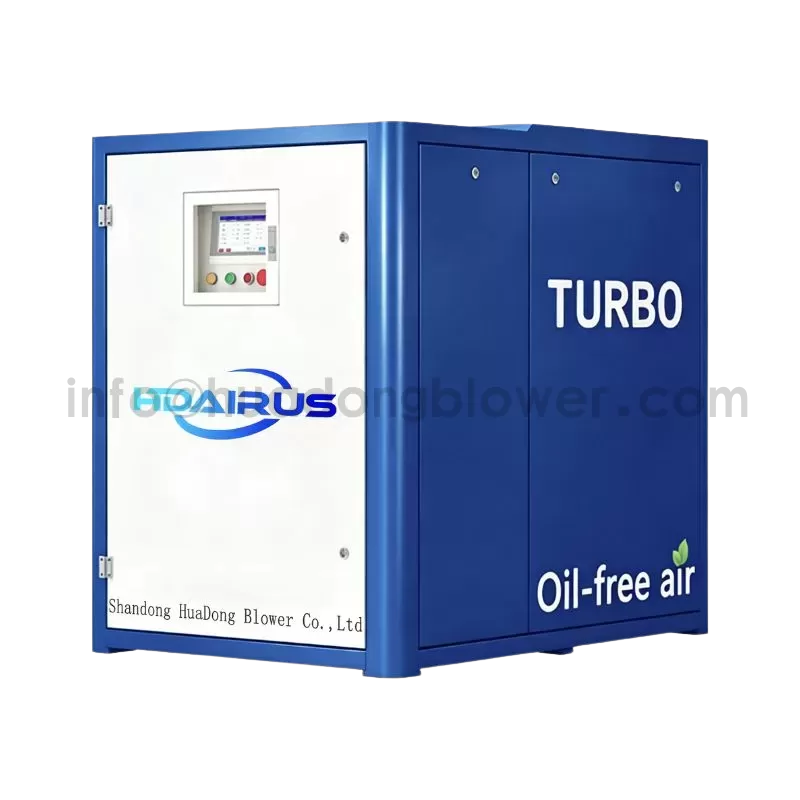
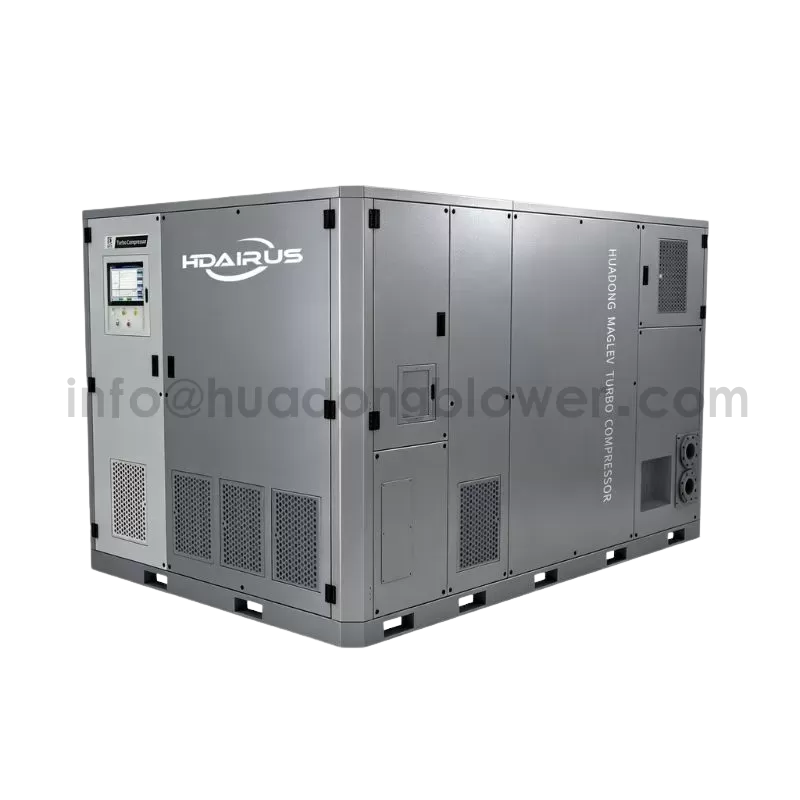
Maglev turbo blowers integrate active magnetic bearings (AMB), high-speed permanent magnet synchronous motors (PMSM), and high-efficiency centrifugal impellers to deliver superior performance.
100% Oil-Free Operation: Active magnetic levitation eliminates mechanical friction, oil lubrication systems, and the risk of lubricant mist contaminating boiler air ducts or preheaters.
High Energy Efficiency: High-speed direct-drive turbo impellers yield energy savings of 20% to 30% compared to traditional Roots blowers and belt-driven centrifugal fans.
Pulsation-Free Continuous Airflow: Centrifugal compression provides smooth, continuous air volume, preventing bed material channeling or pressure fluctuations caused by air pulsations.
Wide Turndown and Fast Response: Integrated variable frequency drives (VFD) allow smooth turndown from 30% to 100% speed, enabling fast load tracking for dynamic boiler control.
3. Critical Operating Considerations in Power Plant Environments
Deploying maglev turbo blowers in industrial boiler rooms demands specific plant integration features:
Inlet Air Filtration: Boiler room environments contain high ambient dust levels. Multi-stage filtration systems protect high-speed impellers from particle erosion.
Thermal Management & Enclosure Cooling: High-speed motors generate heat that must be dissipated via air-to-air or water cooling loops to protect control electronics.
Grid Disturbance Protection: Advanced power electronics incorporate ride-through technology to maintain magnetic bearing levitation during brief voltage dips or grid fluctuations.
4. Manufacturing Capabilities of Shandong Huadong Blower Co., Ltd.
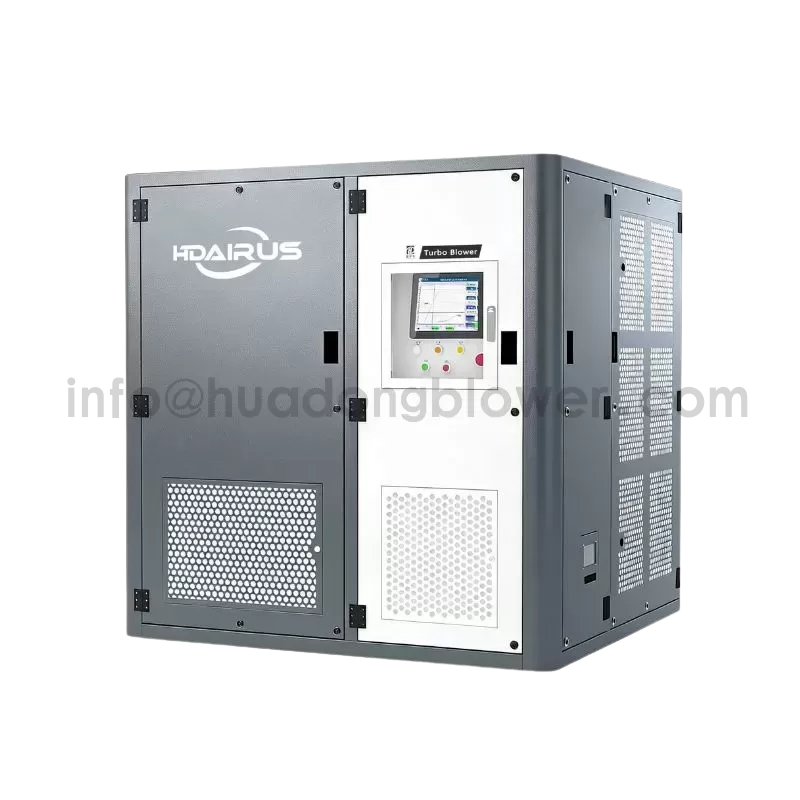
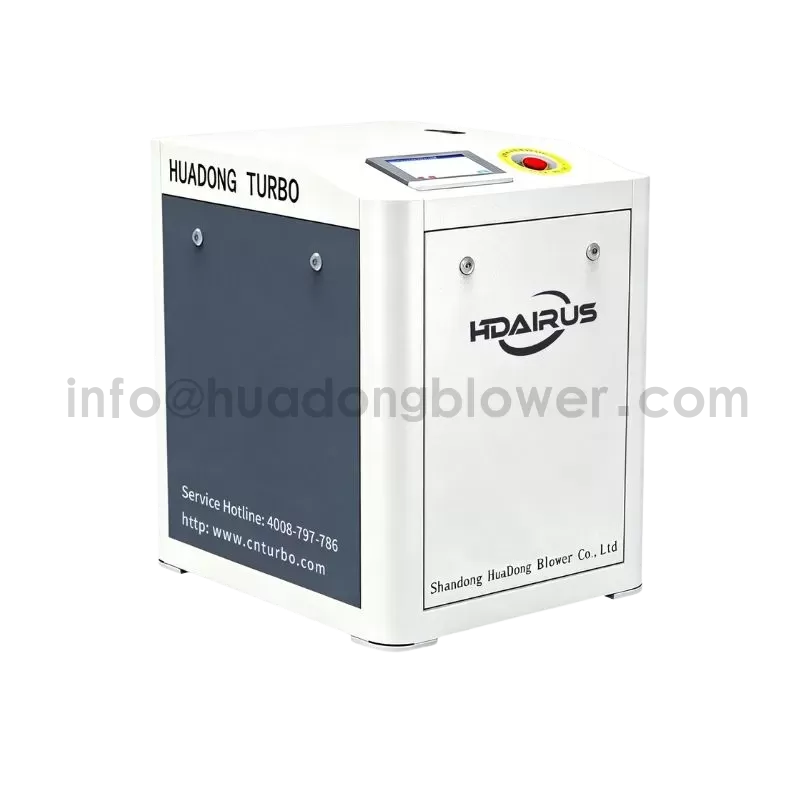
Shandong Huadong Blower Co., Ltd. manufactures advanced turbomachinery for high-demand industrial process applications. Operating from its 100,000 square meter smart production facility in Zhangqiu, Jinan, China, the company engineers custom HDAirus maglev turbo blowers tailored for boiler plants and energy recovery projects.
Engineering Highlights of HDAirus Maglev Turbo Blowers
High-Precision Impeller Design: Five-axis CNC machined aluminum alloy impellers deliver high aerodynamic efficiency and wide operating ranges.
Active Magnetic Bearing System: Real-time position sensors adjust magnetic levitation forces 15,000 times per second, ensuring zero mechanical contact and minimal vibration.
Integrated Smart Control Cabinet: Built-in VFD, PLC, and touchscreen interfaces connect seamlessly with power plant Distributed Control Systems (DCS) via Modbus or Profibus protocols.
Heavy-Duty Acoustic Cabinet: Sound-dampened enclosures keep operating noise levels below 80 dB(A), creating a safe working environment in boiler halls.
By integrating HDAirus maglev turbo blowers into fluidized bed combustion systems, plant operators achieve stable bed fluidization, lower auxiliary power consumption, and optimize combustion efficiency.
Recommended Products