Stable Air Delivery for Desulfurization: How Screw Blowers Ensure Reliable Operation in Power Plant FGD Systems
Release time: Sep.17.2026
Click volume: Views
Flue Gas Desulfurization (FGD) systems are critical environmental safeguards in fossil-fuel power plants and heavy industrial facilities. Among various FGD technologies, Wet Limestone-Gypsum Desulfurization remains the global standard for capturing sulfur dioxide ($SO_2$) from combustion exhaust.
A key chemical phase in wet FGD operation is the oxidation of calcium sulfite ($CaSO_3$) into calcium sulfate ($CaSO_4 \cdot 2H_2O$, or synthetic gypsum). Screw blowers supply the continuous, high-pressure oxidation air required for complete chemical conversion, ensuring regulatory compliance and producing commercial-grade gypsum bypass products.
1. Oxidation Kinetics in Wet Flue Gas Desulfurization
Inside the FGD absorber tower, raw flue gas contacts recirculating limestone slurry. Oxidation air must overcome static liquid head pressure to saturate the slurry with oxygen.
+-----------------------------------------------------------------------+
|                 FLUE GAS DESULFURIZATION (FGD) AIR SYSTEM             |
|                                                                       |
|  [ Ambient Air Intake ] ──> [ Oil-Free Screw Blower ]                 |
|                                      │                                |
|                                      ▼                                |
|  [ Oxidation Air Header ] ──────────> [ Absorber Slurry Sump ]        |
|                                      │                                |
|                                      ▼                                |
|  [ CaSO3 Slurry + O2 ] ────────────> [ CaSO4 Gypsum Crystallization ] |
+-----------------------------------------------------------------------+
Core Process Demands for Oxidation Blowers
Overcoming Slurry Hydrostatic Head: Oxidation lances sit deep within the absorber sump, requiring blowers to maintain stable discharge pressures between 60 kPa and 110 kPa.
Continuous Chemical Oxygen Demand: Incomplete oxidation yields sticky calcium sulfite, causing slurry scaling, pipe clogging, and degraded gypsum purity.
Corrosive and Humid Ambient Environment: Power plant FGD zones feature high humidity, sulfur fumes, and ambient chemical particulates that stress intake air machinery.
2. Why Screw Blowers Outperform Traditional Technologies in FGD
Rotary screw blowers employ helical male and female rotors that compress air internally. This design offers distinct mechanical advantages over traditional Roots blowers and multi-stage centrifugal fans.
Up to 35% Energy Savings: Internal compression makes screw blowers significantly more energy-efficient than external-compression Roots blowers, yielding substantial power savings under continuous duty.
100% Oil-Free ISO 8573-1 Class 0 Air: Teflon-coated or stainless rotors operate without oil in the compression chamber, preventing lubricant contamination in the absorber slurry.
Wide VFD Turndown for Load Matching: Screw blowers operate efficiently across a 30% to 100% speed range, matching air output to real-time boiler load and flue gas $SO_2$ concentrations.
Lower Operating Temperatures: Internal compression efficiency results in lower discharge air temperatures, extending hose and seal life along the air distribution header.
3. Engineering Integration in FGD Systems
Deploying screw blowers in power plant FGD operations requires specific design configurations:
Corrosion-Resistant Housing & Coatings: Internal airflow components feature protective coatings to resist chemical attack from ambient $SO_2$ vapor.
Robust Inlet Air Filtration: Heavy-duty, multi-stage inlet filters protect screw rotors from airborne gypsum dust and ash particles.
Smart DCS Connectivity: Integrated PLCs support Industrial Ethernet protocols (Modbus TCP, Profibus) for real-time control from the central power plant control room.
4. Manufacturing Capabilities of Shandong Huadong Blower Co., Ltd.
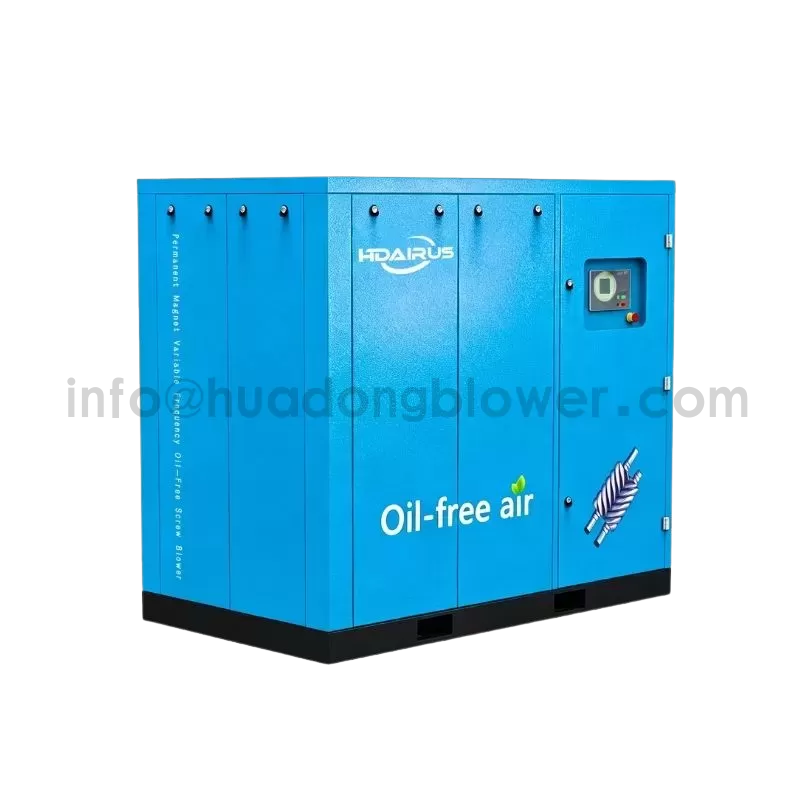
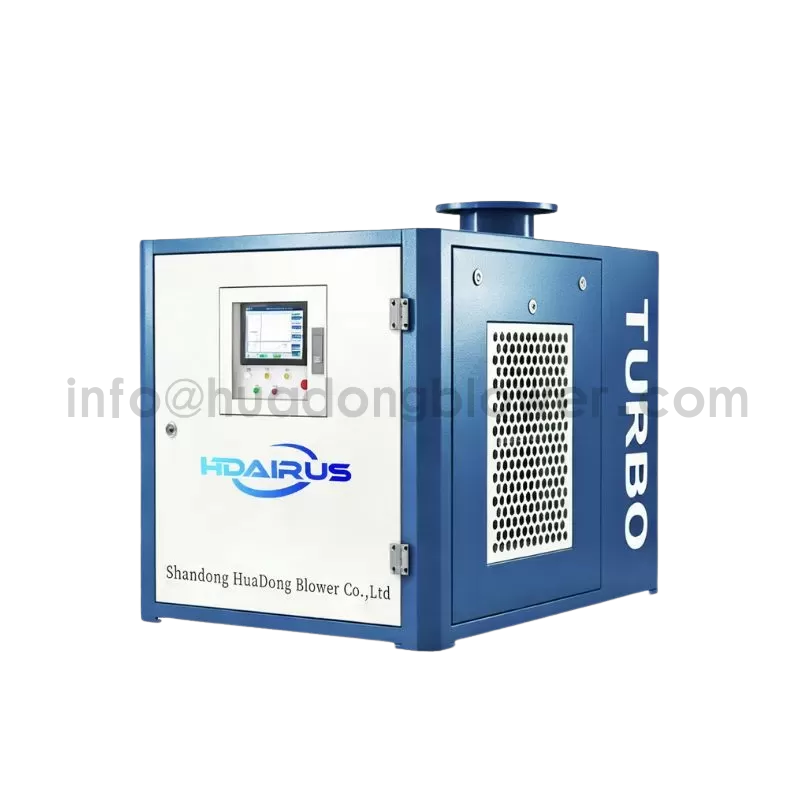
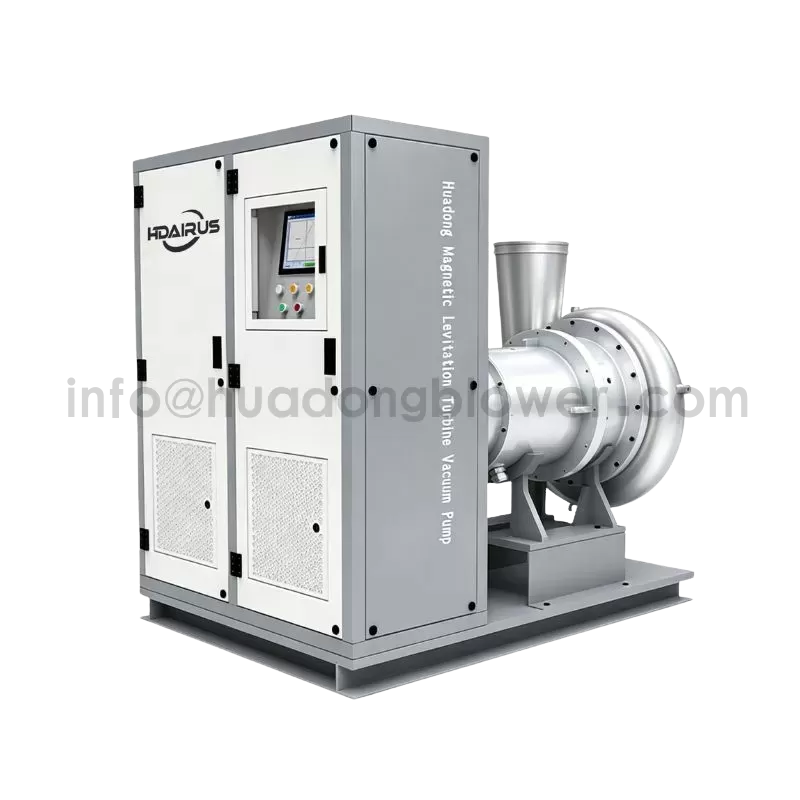
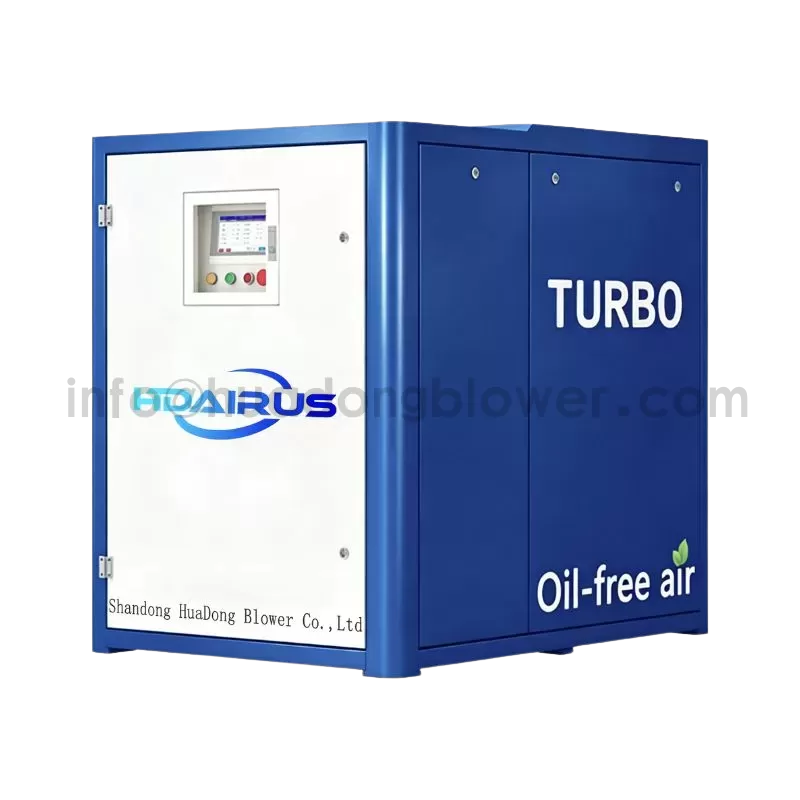
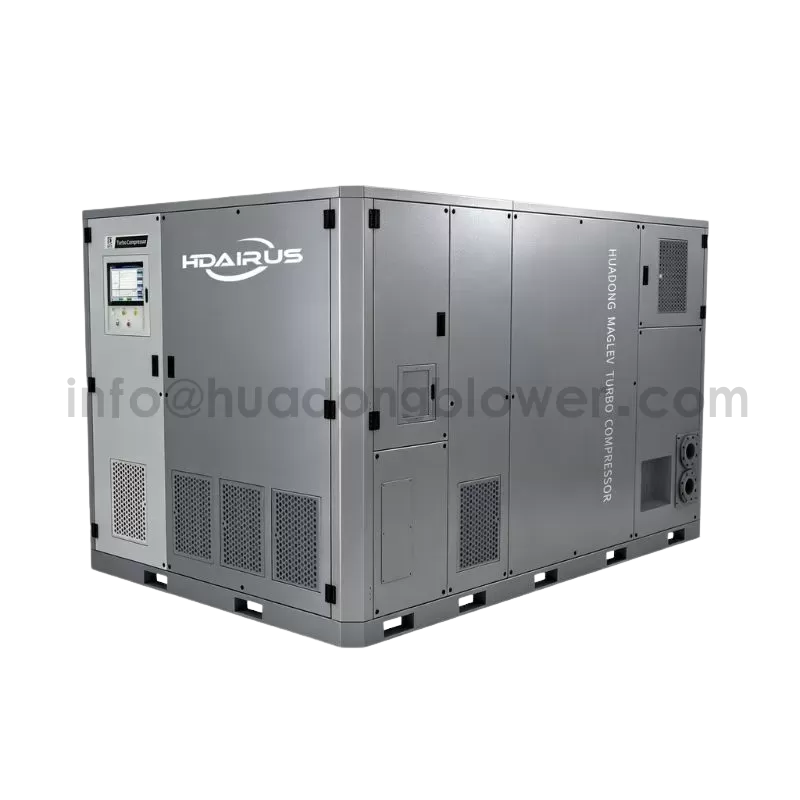
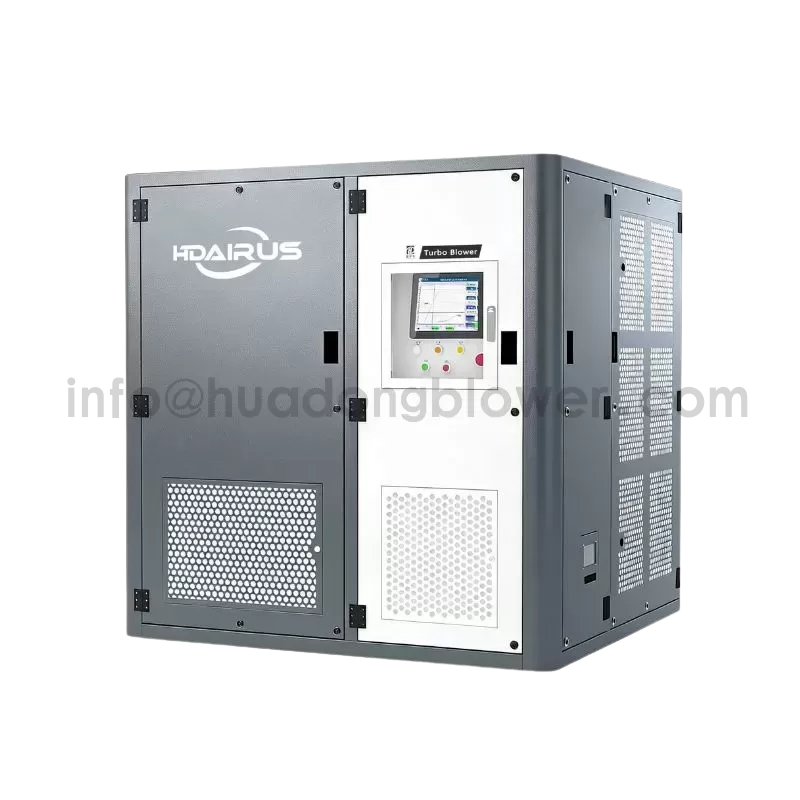
Shandong Huadong Blower Co., Ltd. manufactures heavy-duty process air equipment for power generation and environmental engineering. Operating from its 100,000 square meter smart manufacturing center in Zhangqiu, Jinan, China, the company engineers custom HDAirus screw blower packages for global thermal power plants.
Engineering Highlights of HDAirus FGD Screw Blowers
Precision CNC Helical Rotor Profile: Precision-ground screw profiles minimize leakage losses and deliver high volumetric efficiency.
Complete Skid-Mounted Package: Shipped fully assembled with integrated cooler, discharge silencer, check valve, and VFD control panel for rapid site installation.
By integrating HDAirus oil-free screw blowers into FGD oxidation air systems, power plant operators achieve continuous sulfur removal, lower auxiliary power consumption, and produce high-quality gypsum.
Recommended Products