Magnetic Levitation Air Compressors vs Traditional Screw Compressors
Release time: May.27.2026
Click volume: Views
The Evolution of Industrial Air Compression
For decades, the twin-screw compressor has been the workhorse of industrial manufacturing, automotive assembly, and chemical processing. It is a reliable machine designed to deliver continuous baseline air. However, as global industries transition into energy-conscious frameworks, the mechanical limitations of contact-based compression have become highly visible.
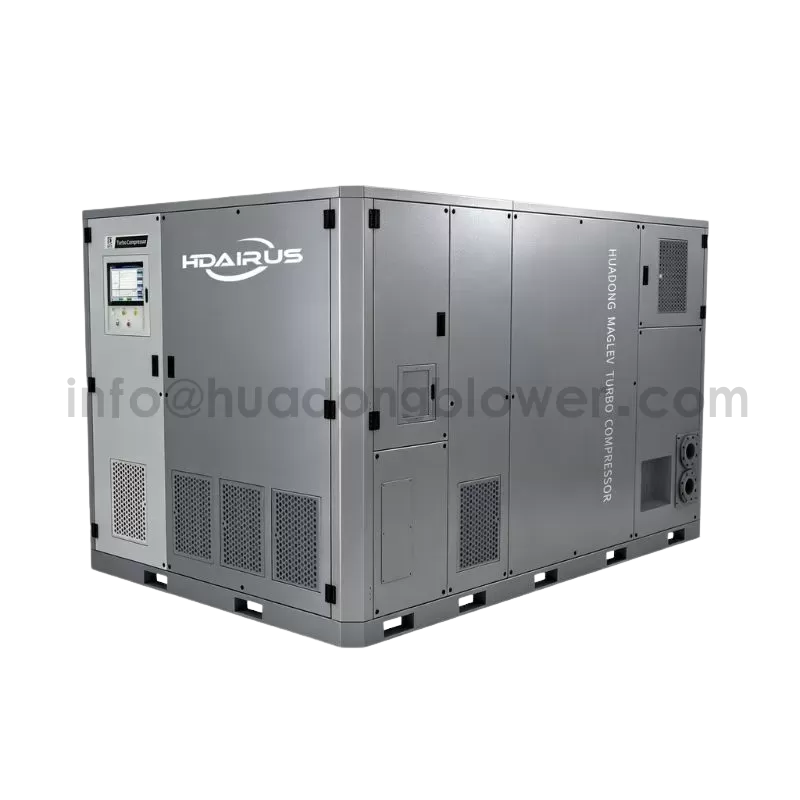
Magnetic Levitation (Maglev) air compressors represent a shift from volumetric positive displacement to high-speed dynamic compression. By replacing physical bearings and contact screws with a frictionless magnetic field and high-speed centrifugal impellers, Maglev systems eliminate the mechanical overhead that lowers the efficiency of traditional factories.
Core Mechanical Differences: How They Operate
The fundamental divide between these two technologies lies in how they compress air and support their internal rotating assemblies.
Traditional Twin-Screw Compressors
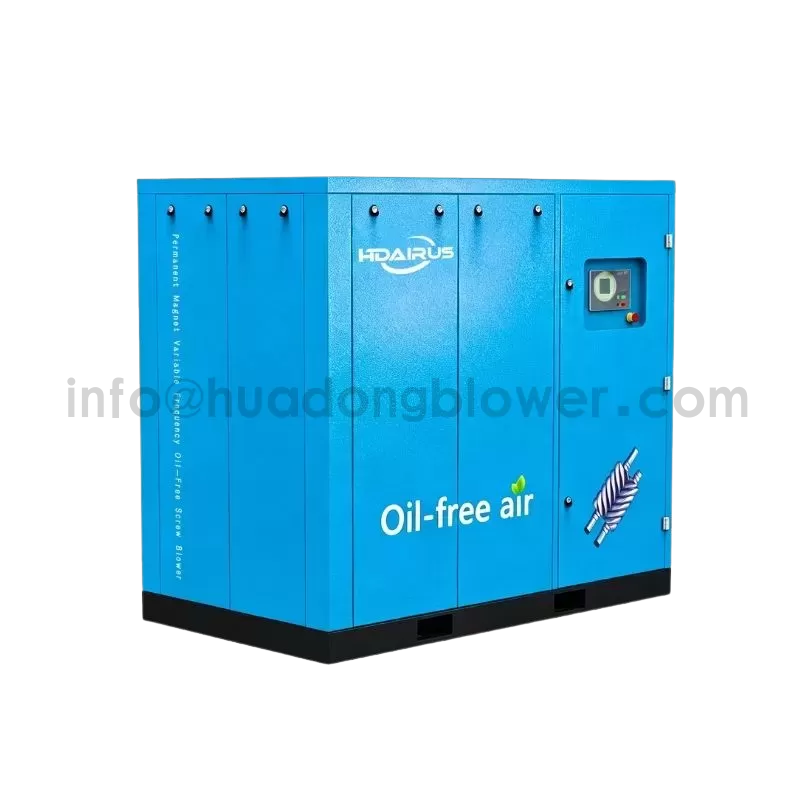
A screw compressor is a positive displacement machine. It utilizes a male and female rotor machined with matching helical profiles. As the rotors turn, they trap a volume of ambient air at the intake port and mechanically reduce the volume as the air moves along the length of the screws, driving up the pressure.
To prevent air slippage and manage extreme heat, the compression chamber must be continuously flooded with oil (in oil-injected models) or rely on highly specialized Teflon-style coatings and complex timing gears (in dry-screw models). The entire rotating mass is supported by heavy-duty rolling element bearings that experience continuous physical wear.
Magnetic Levitation Compressors
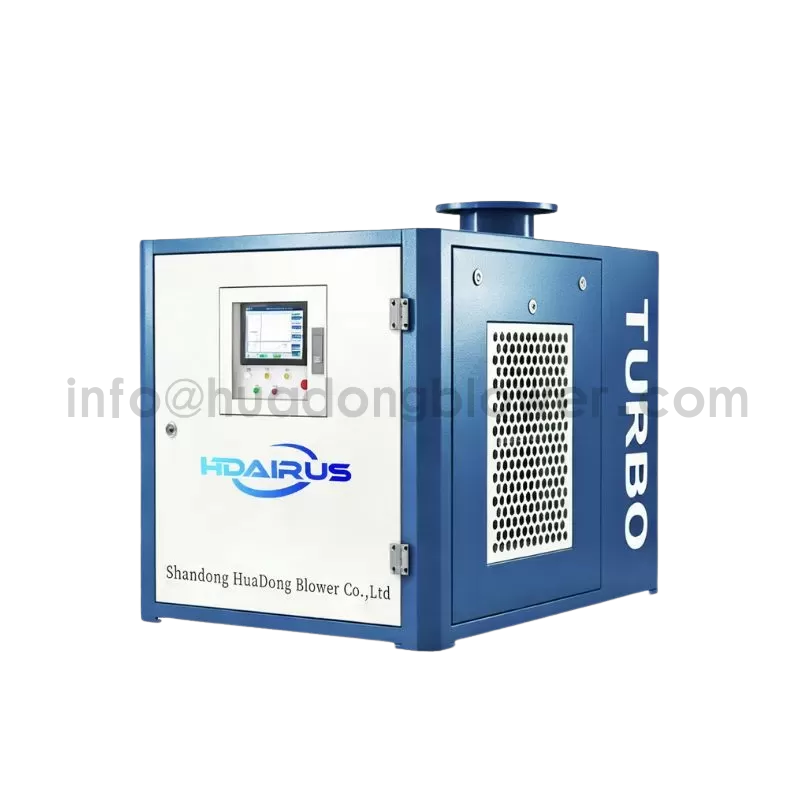
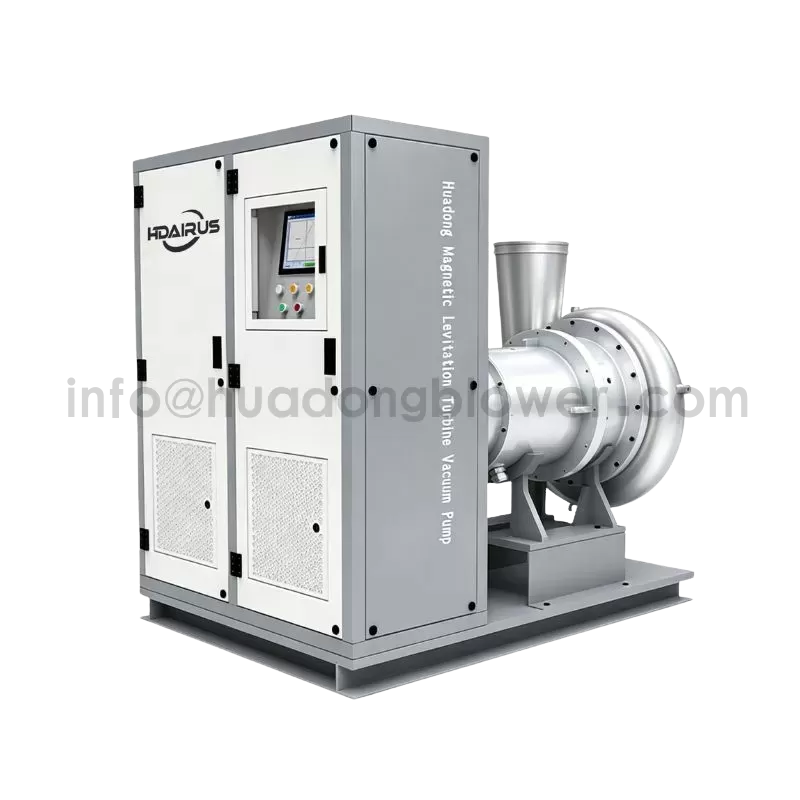
A Maglev compressor is a high-speed dynamic centrifugal machine. Instead of squashing air between screws, a precision-engineered titanium or aluminum impeller rotates at tens of thousands of RPM, kinetically accelerating the air and converting that velocity into pressure via a diffuser channel.
The defining breakthrough of this technology is the Active Magnetic Bearing (AMB) system. Built-in position sensors monitor the location of the high-speed motor shaft thousands of times per second. This data is fed into a digital controller that continuously adjusts the electromagnetic field surrounding the shaft. The shaft levitates completely within this field, maintaining a micro-clearance from the housing. It rotates with zero physical contact, zero friction, and zero mechanical wear.
Technical Head-to-Head Comparison
Evaluating these systems across key industrial metrics highlights why modern facility managers are shifting toward levitation technology:
Operational Metric | Traditional Twin-Screw Compressor | Magnetic Levitation Blower/Compressor |
Mechanical Friction | High (Continuous contact between screws/bearings) | Zero Friction (Shaft floats in a magnetic field) |
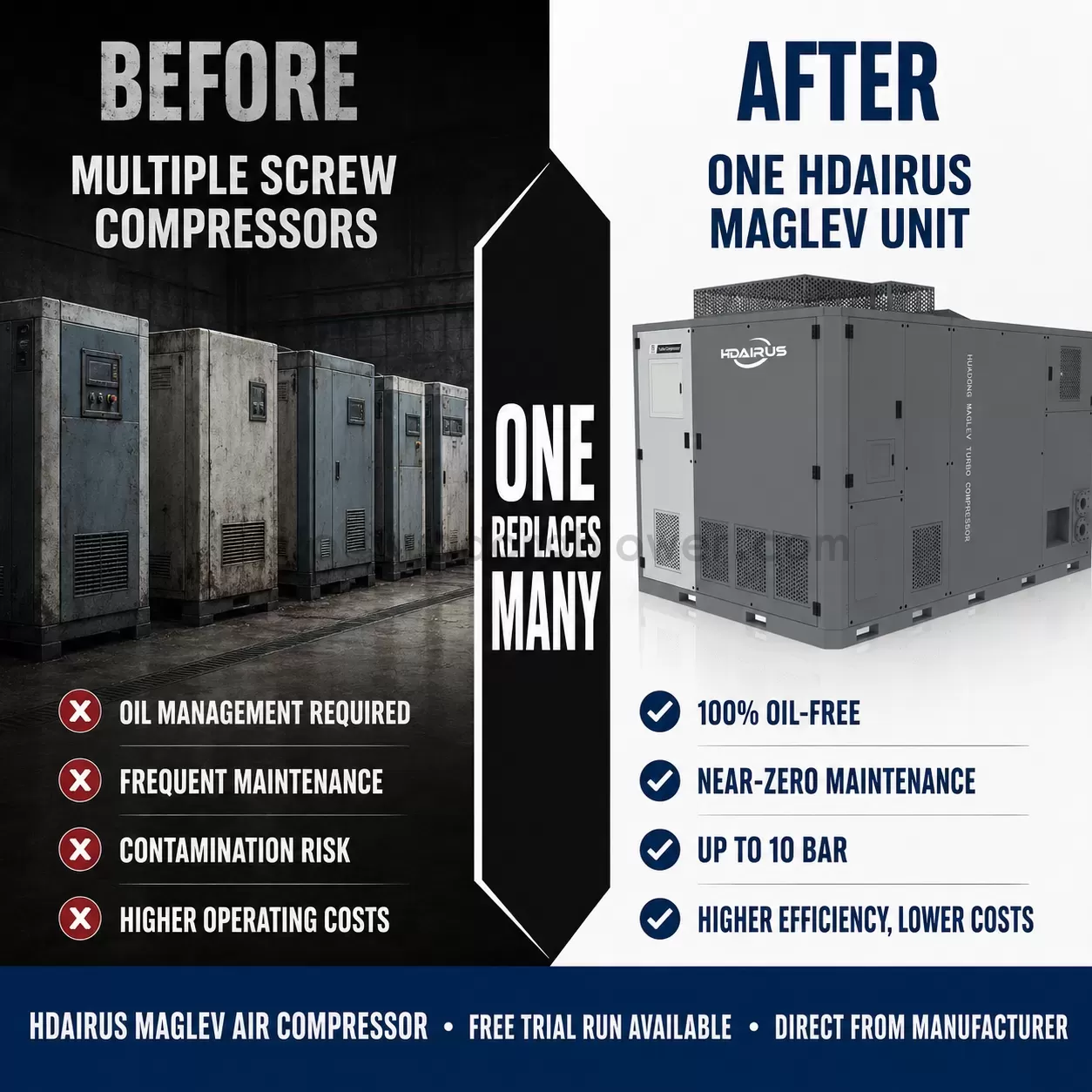
Lubrication Requirements | Heavy oil charge or complex timing grease | 100% Oil-Free Natively (No oil anywhere in unit) |
Energy Consumption | Standard baseline; high transmission losses | 20% to 35% Lower (No belt, gear, or friction loss) |
Acoustic Footprint | High (Typically 80–95 dBA, requires heavy enclosure) | Ultra-Quiet (Typically under 75 dBA) |
Standard Maintenance | Oil changes, separator filters, belt/gear checks | Filter replacements only (No oil/bearing wear) |
Part-Load Efficiency | Drops significantly when idling or unloading | Maintains high efficiency via integrated VFDs |
Deconstructing the Efficiency Gains
The economic justification for replacing a screw compressor with a Maglev system centers on three major technological factors:
1. Elimination of Transmission Losses
Screw compressors rely on belts or internal gearboxes to step up the motor speed to the required rotor velocity. Every gear mesh and belt turn creates a parasitic energy loss. Maglev compressors feature a direct-drive configuration. The centrifugal impeller is mounted directly onto the motor shaft powered by a high-speed permanent magnet (PM) synchronous motor, raising transmission efficiency to a true 100%.
2. Frictionless Partial-Load Performance
Industrial air demand fluctuates throughout a production shift. When a screw compressor vents excess pressure to run "unloaded," it still draws up to 30% of its full-load power just to overcome the physical friction of its internal oil film and bearings. A Maglev machine utilizes an integrated Variable Frequency Drive (VFD) to lower or raise its rotation speed instantly. Because there is no friction to overcome, its energy drop-off matches your actual process demand perfectly, locking in massive electrical savings during low-production windows.
3. Zero Oil Degradation Over Time
In an oil-flooded screw compressor, oil vapors form a thermal barrier inside downstream piping and heat exchangers over years of operation. This oil coating limits heat transfer and forces the system to work harder to maintain target pressures. Natively oil-free Maglev units deliver pristine process air, ensuring your downstream filters, piping, and automated valves maintain their day-one efficiency profile without suffering from hydrocarbon fouling.
HDAirus Material Standards and Global Certification
Deploying advanced high-speed turbomachinery into heavy-duty industrial environments demands strict adherence to rigorous engineering baselines. HDAirus constructs its magnetic levitation compression systems using high-performance materials tailored to volatile industrial climates:
l Heavy High-Strength Cast Iron: Used for the main structural housing to ensure excellent acoustic dampening and high pressure containment.
l Premium Stainless Steel and Specialized Alloys: Used for internal air path components and dynamic impellers to completely eliminate the risk of moisture-induced oxidation or micro-pitting.
l High-Quality Specialized Coatings: Applied to internal casing surfaces to protect the close tolerances from fine atmospheric dust and ambient humidity.
Our production infrastructure operates under a strict ISO 9001 quality management framework. To ensure uncompromised safety and seamless cross-border integration for global engineering procurement projects, all HDAirus Maglev configurations carry complete CE and EAC marks, matching the strict technical and electrical safety codes mandated by international industrial markets.
Recommended Products